INN
Holy Spirit Nursing Students Join HIV Awareness Campaign in Dima Hasao
Thursday, 17 September 2026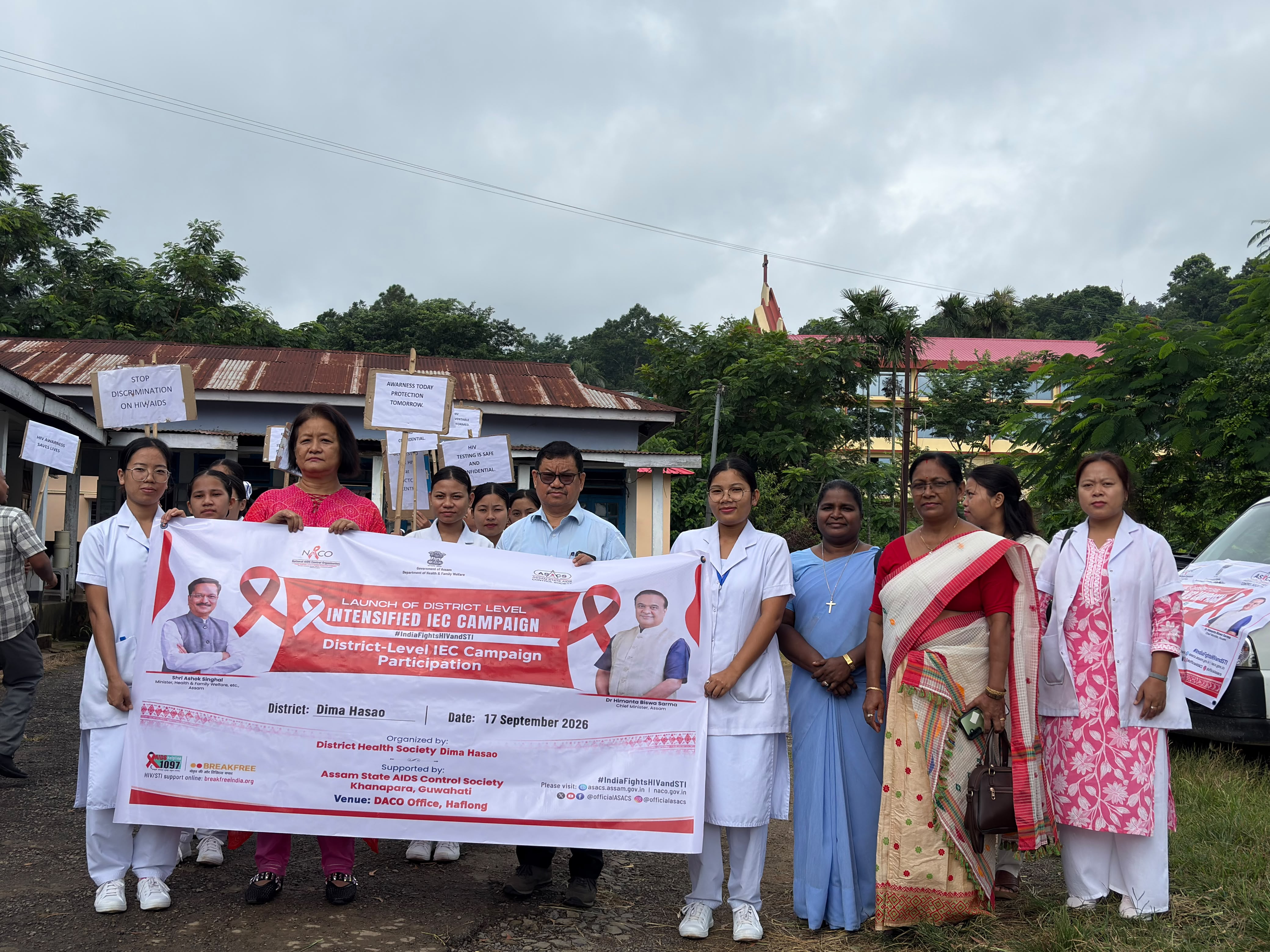
The Intensified Information, Education and Communication (IEC) Campaign for the Control
of HIV was officially launched in Dima Hasao District with the objective of creating
awareness about HIV prevention, early diagnosis, treatment, and the elimination of stigma
associated with the disease.
Sr. Pushpa Rani, accompanied by two faculty members and 40 ANM students from the Holy
Spirit School of Nursing, attended the programme. During the inaugural session, Dr. C. Changsan, District Health Officer (TB & HIV),
delivered an informative address. She stated that 96 HIV-reactive cases have been identified
in Dima Hasao District. She emphasized the importance of strengthening IEC activities to
improve public awareness and encourage early testing and treatment.
Dr. Changsan highlighted that some individuals are reluctant to complete the prescribed six-
month treatment, making continuous counselling and follow-up essential.She explained that
patients receiving treatment should undergo a viral load test every six months to monitor the
effectiveness of therapy. She noted that individuals with a high viral load are more likely to
transmit the virus to others, whereas effective treatment suppresses the virus, enabling people
living with HIV to lead healthy and productive lives. She further stressed that if HIV is left
untreated, it can progress to Acquired Immunodeficiency Syndrome (AIDS).
The Joint Director addressed the gathering by emphasizing that awareness is the most
effective tool in preventing HIV transmission. He explained that HIV can spread through
unprotected sexual contact, transfusion of infected blood or blood products, and the sharing
of contaminated needles and syringes. He urged everyone to exercise caution and
responsibility in their daily lives.
He further stressed that HIV prevention is not solely the responsibility of healthcare
professionals. Teachers, educational institutions, community leaders, and every member of
society have an important role in educating young people and creating awareness. He
highlighted the growing association between drug abuse and HIV transmission, particularly
through the sharing of needles among injecting drug users, and encouraged everyone to
promote the message "Say No to Drugs." He appealed to all participants to continue
spreading awareness within their communities.
Another resource person explained the four major modes of HIV transmission:
Unprotected sexual intercourse
Sharing contaminated needles and syringes
Mother-to-child transmission during pregnancy, childbirth, or breastfeeding
Transfusion of infected blood or blood products.
The programme concluded with a strong message that awareness, education, early testing,
adherence to treatment, regular viral load monitoring, and community participation are
essential for preventing HIV transmission and ensuring that people living with HIV enjoy a
healthy and dignified life. The campaign motivated all participants, especially the ANM
students, to become active ambassadors of HIV awareness and prevention in society.
By
Sr. Pushpa Rani.SSpS
Holy Spirit School of Nursing, Haflong